
Not Every Cough Is a Virus: Your Autumn Health Guide for Kuwait
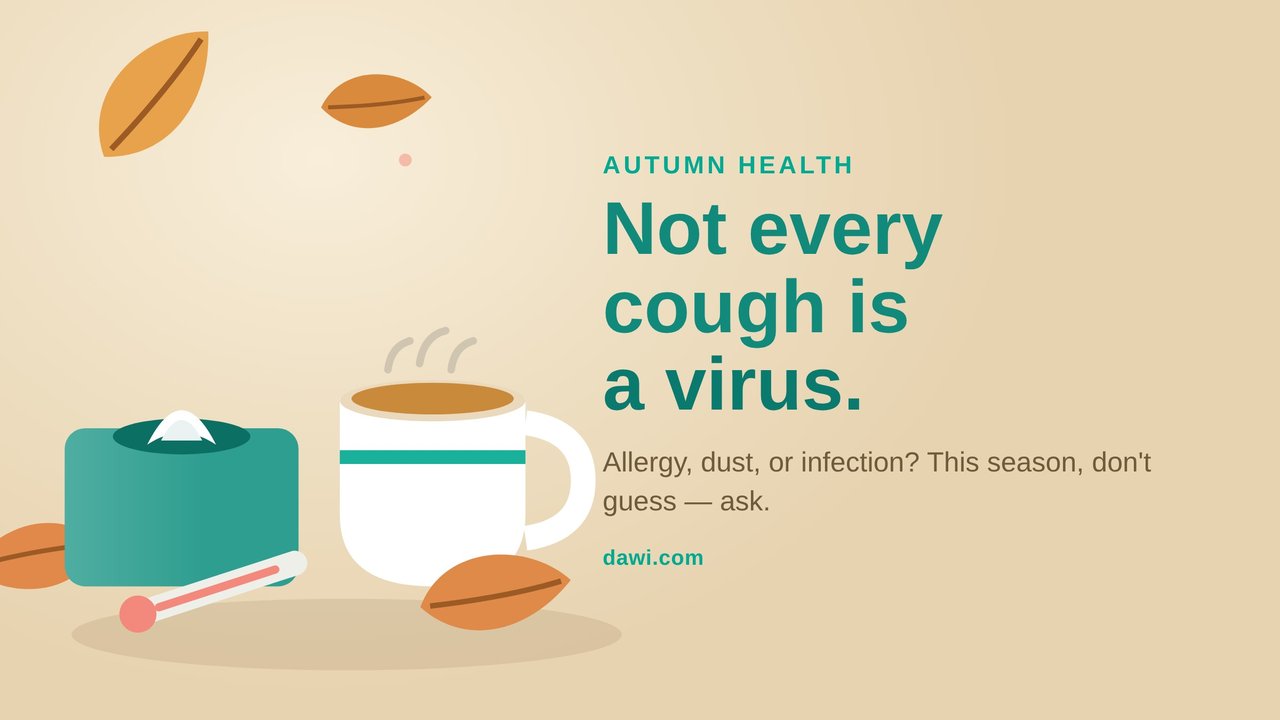
## Everyone's coughing — and it's that time of year
Walk through any office, school or majlis in Kuwait right now and you'll hear it: the autumn cough. Every year as the weather finally shifts, coughs and sniffles sweep through the country almost on schedule. It's easy to assume it's "a bug going around" and reach for whatever's in the cabinet. But local doctors have a timely reminder this season, and it's worth hearing: not every cough is a virus.
That single idea can change how you handle the next few weeks — because what you do about a cough depends entirely on what's actually causing it.
## Why autumn makes Kuwait cough
Several things pile up at exactly this time of year. The weather swings — warm days, cooler nights, shifting humidity — irritate the airways, especially for anyone prone to allergies or asthma. Dust in the air does the same. At the same time, respiratory viruses like colds, flu, RSV and COVID-19 spread more easily now that people are gathered indoors, kids are back in school, and travellers are returning from the summer. Add it all together and you get a season almost designed to make everyone cough.
Crucially, these causes aren't the same thing. Allergies and asthma aren't contagious — they're your body reacting to the environment. Viruses are passed from person to person. And as one Kuwaiti physician put it plainly, cold weather itself doesn't cause the flu; the virus still has to be caught from someone. Knowing which camp your cough is in is the whole game.
## Allergy, dust, or infection? How to read the signs
There's no perfect at-home test, but the pattern often gives a clue. A cough that comes with itchy or watery eyes, a clear runny nose, sneezing, and no fever — especially if it flares at the same time every year or around dust — leans towards allergy or weather sensitivity. A cough that arrives with fever, body aches, fatigue and a general "knocked-flat" feeling, and that seems to be spreading through your household or office, leans towards a viral infection.
That said, here's the honest part doctors stress: symptoms alone aren't always reliable. The same cough can have very different causes, and the only way to be sure in a borderline case is a proper assessment. So use the patterns as a guide, not a verdict.
## The precautions that actually help
Whatever the cause, a few sensible habits make this season easier. Keep your indoor air well ventilated and limit direct exposure to dust on windy days. Wash your hands regularly and keep your distance from anyone who's clearly unwell. If you're eligible, the seasonal flu vaccine — and the pneumonia vaccine for certain groups — is one of the most effective steps you can take, and now is the time for it. And the everyday basics genuinely matter: balanced meals, enough sleep, and regular movement all help your body cope.
One more, and doctors are firm on this: don't reach for antibiotics on your own. They do nothing for viruses or allergies, and taking any medicine without advice can do more harm than good.
## When it's time to see a doctor
Most seasonal coughs settle with rest and care. But some signs mean you shouldn't wait it out: difficulty breathing, a high fever that persists, or symptoms that are clearly getting worse rather than better. These deserve prompt attention. Timing matters too — if it is the flu, antiviral treatment works best when started within about the first 48 hours, so early is better than "let's see."
Be especially proactive if you — or someone you're caring for — are in a higher-risk group: older adults, young children, pregnant women, or anyone living with diabetes, heart, lung or kidney disease, or a weakened immune system.
## Don't guess — just ask
This is exactly the kind of question that doesn't need a clinic trip to answer. With Dawi, you can describe your cough to a licensed doctor from home and get a clear read quickly — is this an allergy to manage, a virus to rest through, or something that needs a closer look and maybe a test? A two-minute conversation can save you a week of guessing, an unnecessary pharmacy run, or a delay that matters.
## The bottom line
The autumn cough is almost a national tradition — but how you treat it shouldn't be a guess. Not every cough is a virus, and knowing the difference means you treat the right thing, protect the people around you, and get back to yourself faster. This season, when the cough arrives, don't assume. Ask.
This article is for general information and is not a substitute for personal medical advice. Speak to a doctor about your symptoms and any concerns.
References
- Kuwait doctors on autumn weather precautions (Times Kuwait): https://timeskuwait.com/not-every-cough-is-a-virus-kuwait-doctors-urge-autumn-weather-health-precautions/
- Kuwait MoH seasonal vaccination campaign (Kuwait Times): https://kuwaittimes.com/article/49113/kuwait/other-news/moh-launches-seasonal-vaccination-drive-to-prevent-respiratory-diseases/
- WHO — Influenza (seasonal): https://www.who.int/news-room/fact-sheets/detail/influenza-(seasonal)