
1 in 5 — and Many Don't Know: Diabetes in Kuwait, and How to Catch It Early
## The number worth pausing on
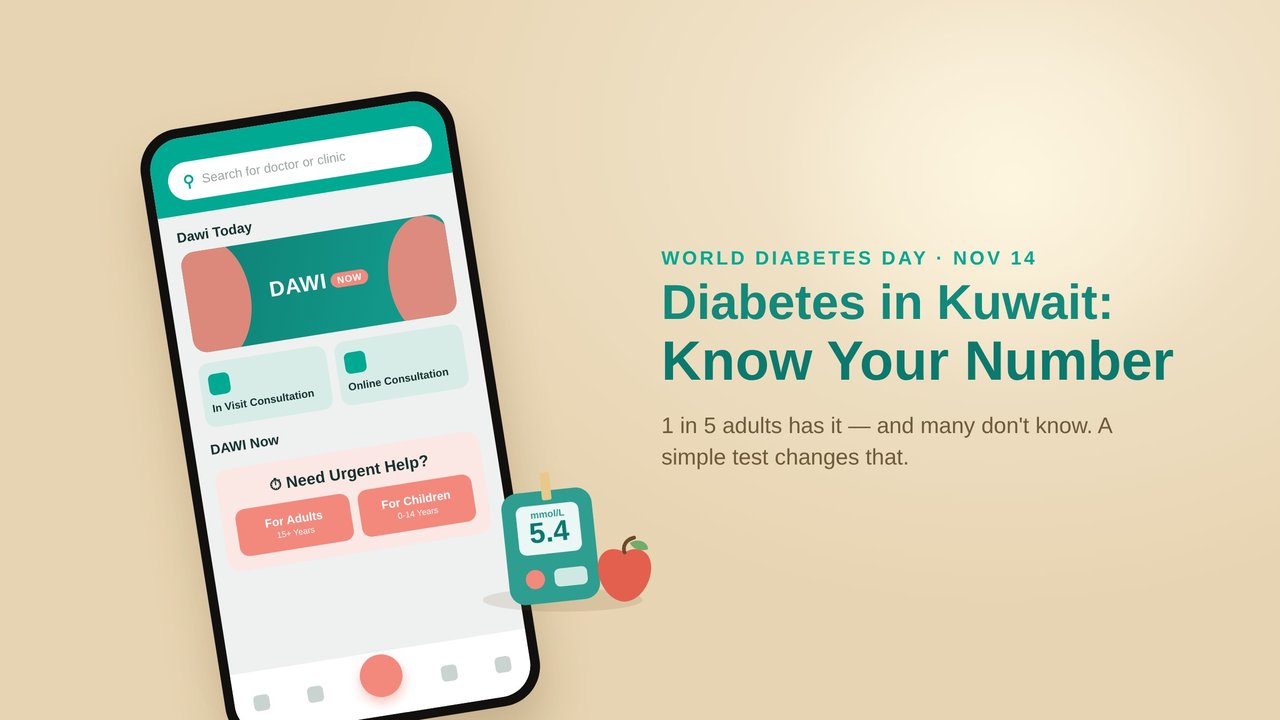
Here's a figure that should give any of us in Kuwait pause: roughly one in five adults is living with diabetes. And the harder part isn't just how common it is — it's how quietly it spreads. Studies here suggest that around four in ten people who have diabetes don't yet know it, and that a very large share of adults are in the in-between stage called prediabetes, often without a single symptom to warn them.
This World Diabetes Day, the most useful thing we can do isn't to worry — it's to understand. Because diabetes, caught early, is one of the most manageable conditions there is. The trouble only starts when it goes unseen for years. So here's a clear guide: what it is, why it's so common here, how to spot it, and the one simple step that changes everything.
## Diabetes and prediabetes — in plain terms
Your body runs on glucose (sugar) in the blood, and a hormone called insulin lets that sugar into your cells for energy. In type 2 diabetes — by far the most common kind — that system stops working smoothly: sugar builds up in the blood instead of fuelling the body, and over years, high blood sugar quietly damages blood vessels, nerves, eyes, kidneys and the heart.
Prediabetes is the stage just before. Blood sugar is higher than normal, but not yet high enough to be called diabetes. Think of it as a flashing amber light — a warning, not a diagnosis. And it's the most important stage of all, because this is the point where the direction can still be changed. Many people never notice they've reached it, which is exactly why it matters to look.
## Why Kuwait is hit so hard
Kuwait has one of the highest rates of diabetes in the world, and the reasons are woven into modern life here. Rates of overweight and obesity are very high, and excess weight is the single biggest driver of type 2 diabetes. The daily routine often works against us too: long hours indoors and in cars, very little walking in the heat, and a food environment rich in sugar, refined carbohydrates and large portions. Add a genetic predisposition that runs through many Gulf families, and the result is a perfect storm. None of this is about blame — it's about recognising that the environment makes this easy to develop, and therefore worth actively watching for.
## The quiet signs
Early diabetes is often silent, which is why so many cases go undiscovered. When signs do appear, they're easy to explain away: feeling thirstier than usual and needing to urinate more often, unusual tiredness, blurred vision, slow-healing cuts, frequent infections, or tingling in the hands or feet. Prediabetes usually has no symptoms at all. Because the early stages are so quiet, symptoms are not a reliable alarm — the only dependable way to know is a simple blood test.
## Who should get checked
If you're over about 35, it's worth knowing your numbers even if you feel completely well. You should be especially proactive if you are overweight, have a parent or sibling with diabetes, had diabetes during pregnancy, have high blood pressure or high cholesterol, or live a mostly sedentary life. In Kuwait, enough of these apply to enough people that a good rule of thumb is simple: if you haven't been checked in the last year or two, it's time.
## The genuinely good news
Here's the part that should leave you encouraged rather than anxious: prediabetes can very often be reversed, and type 2 diabetes can be well controlled — frequently with everyday changes rather than dramatic ones. Losing even a modest amount of weight makes a real difference. Moving your body regularly — a daily walk counts — helps your cells use sugar again. Cutting back on sugary drinks and refined carbohydrates, filling more of the plate with vegetables, protein and fibre, and protecting your sleep all shift the odds in your favour. These aren't about perfection. They're small, repeatable habits that, caught early enough, can turn the amber light back to green.
## The one step that matters most
Everything above depends on a single thing: knowing where you stand. A simple blood test — often an HbA1c, which reflects your average blood sugar over recent months — can tell you in one go whether you're in the clear, in the prediabetes window, or in need of treatment. It doesn't require fasting, and it takes minutes.
With Dawi, you can make that step easy: talk to a licensed doctor from home, discuss whether screening makes sense for you, arrange the test, and then review your results together with a clear plan for what comes next — whether that's reassurance, a prevention plan, or proper management. No guesswork, no long waits — just your number, and a path forward.
## The bottom line
Diabetes is common in Kuwait, but it is not inevitable, and it is rarely sudden. It builds quietly over years — which means there's almost always a window to catch it, and a real chance to change its course. This World Diabetes Day, give yourself the one piece of information that makes all the difference: get checked, know your number, and take it from there.
This article is for general information and is not a substitute for personal medical advice. Speak to a doctor about screening and any concerns.
References
- Kuwait Diabetes Epidemiology Program: https://www.mdpi.com/2077-0383/9/11/3420
- Prediabetes & undiagnosed diabetes study: https://www.tandfonline.com/doi/full/10.2147/DMSO.S296848
- International Diabetes Federation – Kuwait: https://idf.org/our-network/regions-and-members/middle-east-and-north-africa/members/kuwait/